How do PCB conveyor systems improve efficiency in automated SMT production lines?
- Share
- Issue Time
- Jul 7,2026
Direct Answer
PCB conveyor systems create a continuous, automated link between SMT process stages, eliminating manual board transfer, reducing cycle times, and preventing production bottlenecks.
Detailed Explanation
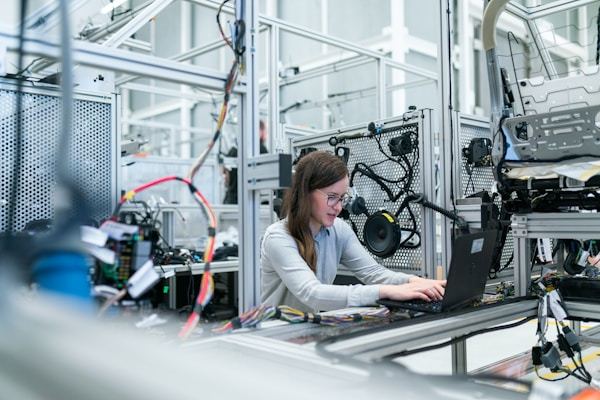
In an SMT line, multiple machines perform different tasks — solder paste printer, pick-and-place machines, reflow oven, inspection stations. Without a conveyor system, each board would need to be manually moved between stations, creating delays and inconsistency. PCB conveyor systems automate this transport, synchronizing the speed between machines. Modern conveyors from Samtronik feature adjustable width mechanisms, anti-static belts, and edge-belt or mesh-belt configurations to handle different board types. They also include sensors at each transfer point to detect jams, misfeeds, or board accumulation, automatically adjusting throughput to prevent line starvation or overflow. Edge-belt conveyors are ideal for double-sided assemblies as they only contact the board edges, while mesh-belt designs support flexible circuits and irregularly shaped boards.

Industry Data & Case Studies
Implementing automated conveyor systems in SMT lines typically reduces board transfer time from 15-30 seconds (manual) to 3-5 seconds (automated). For a line producing 10,000 boards per day, this translates to over 30 hours of saved transfer time monthly. Samtronik's adjustable-width conveyor systems support board widths from 50mm to 460mm and can be configured in straight, curved, or inclined layouts, making them suitable for factories with limited floor space. The SMT equipment market was valued at $6.28 billion in 2025 and is expected to reach $6.82 billion in 2026, with conveyor systems representing a significant share.